Decaf doesn't have to mean less flavour. Caffeine is slightly bitter, but it barely affects the taste. Remove it carefully and everything else stays intact. We roast our decaf fresh every week, with the same care as all our other coffees. And we keep it in stock year-round, usually an approachable Daily and a Microlot with more character.
Almost no caffeine
Decaf isn't completely caffeine-free. A cup of regular coffee typically contains between 60 and 170 milligrams of caffeine. A cup of decaf contains only around 3. So an evening cup is no problem.
Two natural decaffeination methods
We don't decaffeinate our coffee ourselves. That happens in the country of origin, before it reaches us. Specialised companies remove the caffeine from the green coffee beans. The beans then arrive at our roastery, where we roast them fresh.
We use two natural methods: the Mountain Water Process and the sugarcane process. Which one depends on the coffee.
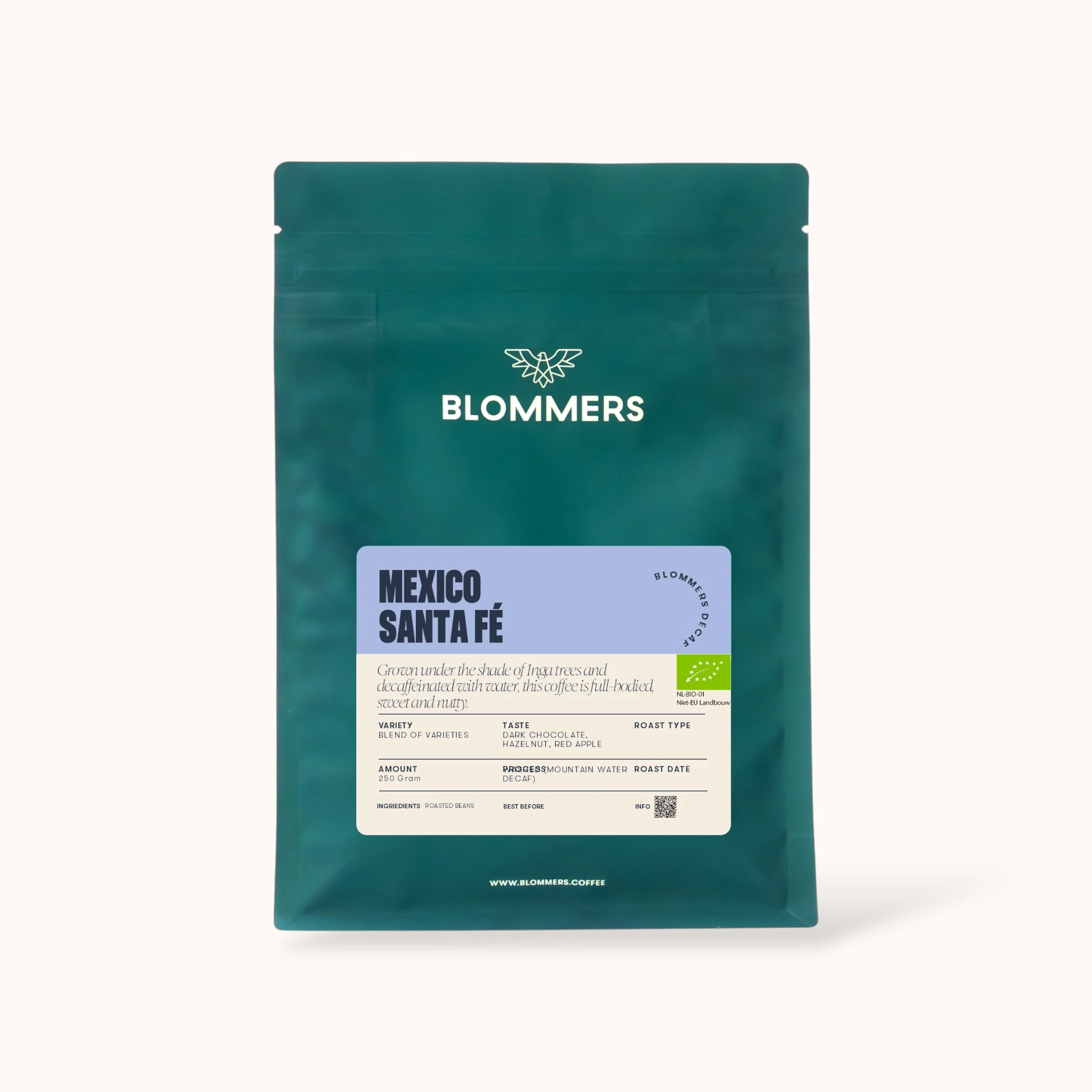
Our decaf from Mexico uses the Mountain Water Process. It works with water alone, no synthetic solvents. The trick is in the water itself. It is already saturated with coffee flavour, because an earlier batch of green beans has soaked in it. The caffeine was then filtered out. When fresh beans go into that same water, only their caffeine leaves. The flavour mostly stays where it belongs, in the beans. This all happens in Veracruz, with mountain water from close to the coffee farms.
Our Colombian decaf goes through the sugarcane process. The caffeine is removed with ethyl acetate, a compound that occurs naturally in fermented sugarcane. It is a solvent, but a natural one, not synthetic. The sugarcane is grown in Colombia, so the whole process stays in one country.
There is one more method, based on dichloromethane, a synthetic solvent. We choose not to use it, even though it is common in supermarket decaf.
The taste of decaf
Decaffeination always changes a coffee a little. So a good decaf doesn't start with the process. It starts with the coffee itself. We choose coffees with enough sweetness and clarity to stay balanced and full of flavour, even without the caffeine.
Decaf is best bought fresh
During decaffeination, the beans become more porous. That makes decaf go stale faster than regular coffee. That's why we roast ours fresh every week. We recommend buying smaller amounts, so you can always enjoy it at its best.
Decaf espresso or filter
Our decaf works well as both filter and espresso. For espresso, grind a little finer than usual. Decaf contains less CO₂, so espresso runs through more quickly. A finer grind gives it enough time to extract properly.
Our decaf coffees
Mexico Fedesi. An organic coffee from the Sierra Mariscal in Chiapas, produced by more than 2,990 smallholder farmers in the FEDESI federation. Grown in the shade of Inga trees. Decaffeinated using the Mountain Water Process. Sweet and round, with notes of citrus, milk chocolate and caramel.
Colombia Las Flores, Pink Bourbon. From Finca Las Flores in Acevedo, Huila, at around 1,750 metres above sea level. Produced by Jhoan Vergara and his brothers, all competition-winning producers. Decaffeinated using the sugarcane process. Pink Bourbon is expressive and sweet. Expect pear and lemongrass, with a lightly spiced finish.
Frequently asked questions
Is there caffeine in decaf coffee?
Yes. A small amount of caffeine remains. A cup of decaf contains around 3 milligrams, while a regular cup typically contains between 60 and 170 milligrams.
Can you make decaf espresso?
Yes. Grind it a little finer than you normally would. Decaf contains less CO₂, so espresso runs through more quickly.
How is coffee decaffeinated?
We use one of two natural methods. The Mountain Water Process uses only water. The sugarcane process uses a natural solvent made from sugarcane. You can read more about both in our explainer article.
Can you drink decaf coffee during pregnancy?
Decaf contains far less caffeine than regular coffee, around 3 milligrams per cup. The Netherlands Nutrition Centre advises pregnant women to keep caffeine under about 200 milligrams a day. As a precaution, it gives decaf the same advice as regular coffee: no more than two cups a day. Check their website for the latest guidance.