
Blommers - Coffee Beans
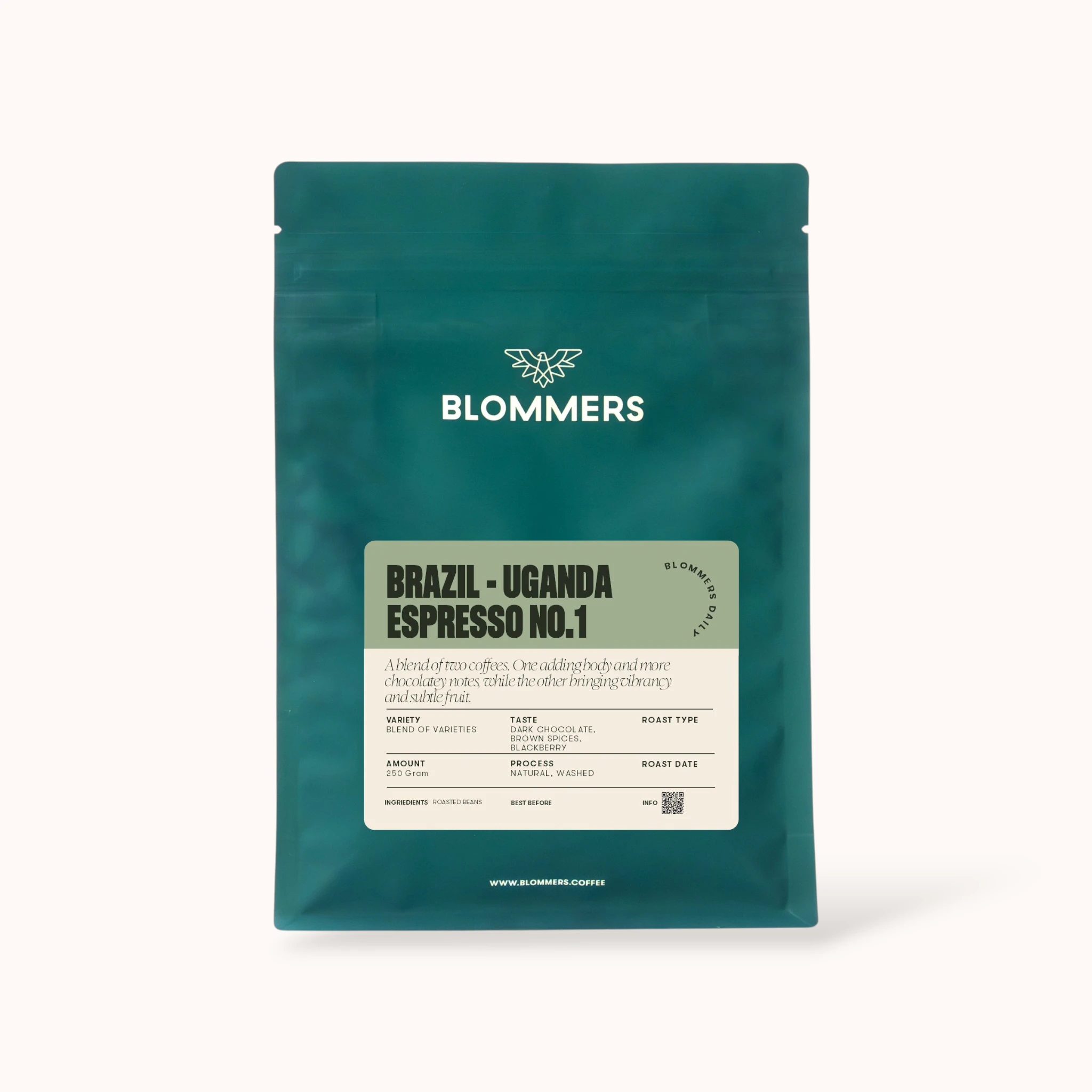
Specialty coffee beans, roasted fresh every week in our roastery in Nijmegen.
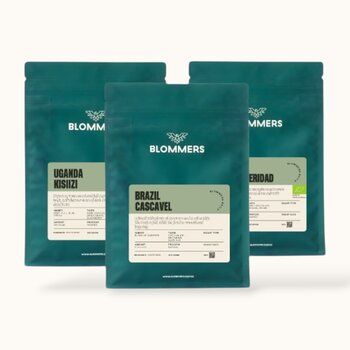
Coffee with a clear character
Specialty coffee beans with a distinct character, from clean and fruity to round and sweet. That character takes shape in the origin where the coffee grows, influenced by variety and processing. When the coffee reaches our roastery in Nijmegen, we refine the roast profile to its qualities and character.
Filter, espresso or decaf
Choose the coffee according to your brewing method or style. Our filter and espresso beans are roasted for their specific brewing method. Prefer it without caffeine? Our decaf works for both espresso and filter.
The coffee that suits you
Coffee is personal. Specialty coffee enthusiasts often enjoy a crisp, fruity coffee, while others prefer chocolate and nutty notes. There's no single coffee that's the best. What matters is which flavours you enjoy.
Still not sure? A tasting pack lets you try several coffees side by side.
Daily, Microlot or Exceptional
Every harvest tells a different story. Climate, soil, variety and processing shape the flavour. The right roast profile makes that difference taste clear.
For filter, we roast for clarity and to highlight the flavour of the origin. For espresso, we roast for balance and sweetness, so the coffee extracts evenly under high pressure. That's a choice in the roast profile, not a difference in quality.
The range is divided into three categories. Daily Espresso is roasted for accessibility with a wide sweet spot, for everyday drinking. Microlot and Exceptional come from award-winning producers. They're smaller harvests in which the origin and character stand out clearly.
Our Exceptionals are the most distinctive lots of the season. They come from unusual varieties or experimental processing, and are often available in limited quantities.
Tasting pack or subscription
Want to taste before you choose? A tasting pack makes it easy to find the coffee that suits you, before you order a larger quantity.
Already know what you like and never want to run out at home? Go for a coffee subscription. Pick one favourite that stays the same, so you can keep brewing your usual recipe without re-dialling the settings every time. Or choose a subscription that brings a different coffee every month, such as a rotating Daily Espresso or Microlot Filter, so you keep discovering and dialling in new recipes. You set the interval and quantity yourself, and can change them anytime.
With care for nature
In June 2009, Robert Blommers visited Finca Irlanda, a biodynamic farm run by close family friends in Chiapas, Mexico. Unlike on a conventional farm, the coffee there grows in the original forest instead of in perfectly planned rows. The animals live in harmony with nature, in their own nature reserve. That visit was a key reason for starting Blommers Coffee Roasters in 2013. Ever since, soil, biodiversity and nature have been central to how we think about coffee, including agroforestry: a large part of our range grows among trees and other crops instead of in a monoculture.
We're SKAL-certified organic (NL-BIO-01.528). Several of our espresso coffees carry the green organic logo on the bag. Whether a coffee is organic doesn't depend on filter or espresso, it depends on the specific coffee.
Our coffee bags are made from Wastemade, recycled plastic, so we don't add new plastic to the chain. That saves 80 percent of new plastic per bag. On our blog, we share more about this and other projects.
FAQ
What are specialty coffee beans?
It starts with how the coffee is bought. Commodity coffee is coffee traded on the world market. Its price is largely set by the daily exchange rate, known as the C-price. For many producers, that price sits below their cost of production, however good their harvest is.
With specialty coffee, every harvest is assessed on its own. We look at quality, origin, variety and how the coffee was processed. Coffees that clearly stand out in quality are bought separately at a higher price. That makes it possible to invest in the quality of the coffee, the livelihoods of the producers and the people who work for them.
Coffee quality is assessed, among other things, by professional tasters. They score the coffee on aroma, flavour, sweetness, acidity, balance and other qualities. Traditionally, a score of 80 points or higher marked the line for specialty coffee. Today, specialty coffee is judged more broadly than by that score alone.
Most specialty coffee is Arabica. Arabica typically has a more refined, complex flavour profile, with more room for sweetness, acidity and aroma. Robusta naturally contains more caffeine and often has a stronger, more bitter, earthier profile. High-quality Robustas exist too, but they're used far less often in specialty coffee.
We buy from producers we know or from trusted partners who share our values and know the language and culture of the country of origin, and we pay for the quality of their coffee. That extra margin gives producers room to invest in their harvest, in the people who work on it and in new processing methods. So it's not only about covering costs; it's also about contributing to better quality, the farm itself and the surrounding region. Think of improvements to soil quality, innovations at processing stations, projects for better working conditions, or building schools in the region.
That's why a bag of specialty coffee beans costs more than a bag of coffee from the supermarket.
What's the difference between a tasting pack and a subscription?
A tasting pack is a one-off order with several coffees side by side, to discover what you like. A subscription is a recurring delivery: you pick one favourite that stays the same, or a subscription that brings a new coffee every month.
Can I order the coffee beans ground?
Yes. For every coffee, you choose between whole beans and ground coffee when you order. Have a grinder? Grinding fresh, right before brewing, preserves more aroma. Ground coffee isn't available for subscriptions.
Do you work with 100% Arabica coffee beans?
Yes. Our specialty coffees are 100% Arabica. Arabica naturally has a more refined, complex flavour profile, which is why it's widely used for specialty coffee. Robusta contains more caffeine and has a stronger, more bitter profile, which is why it's rarely used for specialty coffee.
What's the difference between strong and mild coffee?
People often ask us for strong, mild or light coffee. Those words don't all mean the same thing.
Strength isn't about the roast, it's about how much coffee is dissolved in the water. The less water you use for the same amount of coffee, the stronger it tastes. A dark roast can make a coffee taste heavier and more bitter, though.
That's why people often associate strong coffee with dark roasts and Robusta. Robusta naturally contains more caffeine and has a sharper, earthier profile. Specialty coffee is almost always Arabica, with more acidity, sweetness and aroma.
By "mild" and "soft", people usually mean a coffee that's less bitter and has a more approachable flavour profile. You don't get there through the coffee type alone. The roast and the extraction play a role too.
Want to know which coffee suits your taste? Start with this question: do you like chocolate and nutty flavours in your coffee, or fruit and acidity? We like to switch between different flavour profiles ourselves. That's what makes coffee interesting and lively, though it does take some knowledge and skill to dial in.
How long do coffee beans stay fresh?
Most coffees taste best from about seven to fourteen days after the roast date. After that, an unopened, airtight bag of coffee still stays good for a while, though the flavour gradually fades. Once opened, that happens faster. For the best flavour, we like to drink our coffee within eight weeks of the roast date.
Store coffee beans airtight, somewhere cool, dry and dark. Grind them by portion, right before brewing. Don't buy more coffee than you'll get through. In the fridge, coffee beans pick up moisture and odours, which makes them age faster, so don't store your bag of coffee there. Want to keep a bag of coffee for a long time? Freeze part of it, portioned and airtight, and the flavour will last longest.